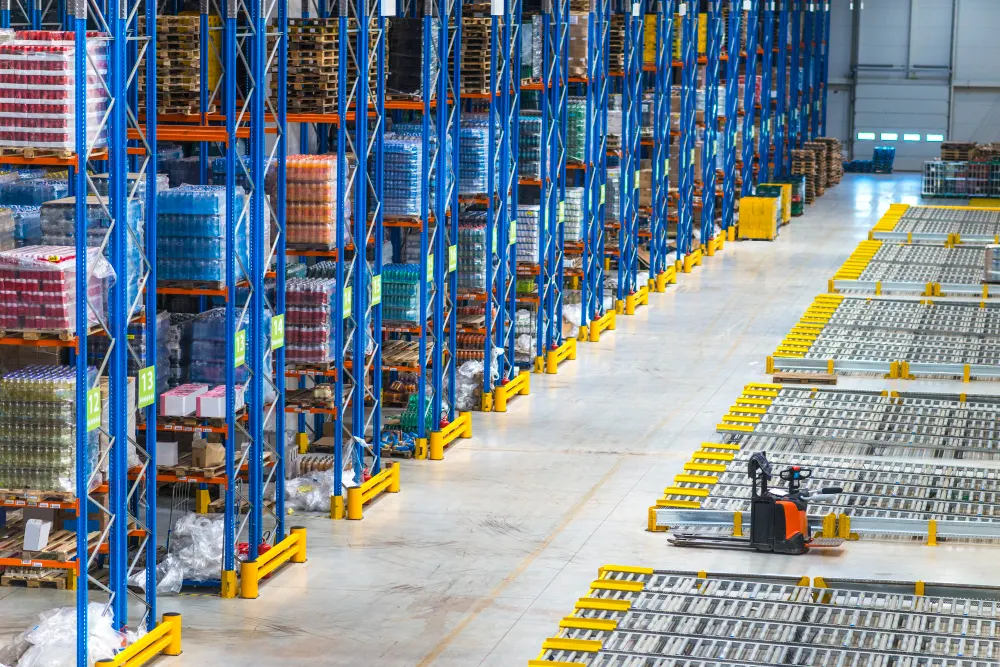
The Inland Empire has quietly become one of the most powerful industrial real estate markets in the entire United States, and savvy investors are taking notice. Stretching across Riverside and San Bernardino Counties, this region—encompassing key cities like Victorville, Apple Valley, San Bernardino, Barstow, and Newberry Springs—has transformed from a bedroom community into a logistics and distribution powerhouse that drives the Southern California economy. For commercial real estate investors seeking stable, long-term returns with significant upside potential, understanding the forces behind this industrial boom is essential to making informed acquisition decisions.
The geographic advantage of the Inland Empire cannot be overstated. Situated at the critical intersection of major interstate highways including I-15, I-10, I-40, and State Route 58, the region serves as the primary gateway for goods entering the Port of Los Angeles and Port of Long Beach—the two busiest container ports in the Western Hemisphere. As e-commerce continues to reshape consumer behavior, the demand for last-mile distribution centers and regional fulfillment hubs has exploded. The Inland Empire sits perfectly within this supply chain ecosystem, offering comparatively affordable land and larger parcel sizes than the congested Los Angeles Basin, while maintaining same-day delivery access to over 20 million Southern California consumers.
Victorville and Apple Valley have emerged as particularly compelling submarkets within this broader growth story. These High Desert communities offer expansive land availability, business-friendly municipal governments, and strategic positioning along the I-15 corridor connecting Las Vegas and Southern California. Industrial tenants ranging from national third-party logistics providers to specialized manufacturing operations have discovered that operating costs—including property taxes, utilities, and labor—can be significantly lower here than in coastal markets, while still providing excellent freeway connectivity. For investors, this translates to competitive cap rates and the potential for substantial rent growth as tenant demand continues to outpace new construction.
San Bernardino represents the more established core of the Inland Empire industrial market, with a diverse tenant base that includes everything from traditional warehousing to cold storage facilities and advanced manufacturing. The city’s ongoing infrastructure investments, including airport expansion and rail intermodal improvements, have strengthened its position as a multi-modal logistics hub. Properties in well-located San Bernardino industrial parks typically command premium rents compared to outlying areas, but they also offer lower vacancy risk and stronger tenant retention rates. For investors prioritizing cash flow stability over speculative appreciation, San Bernardino’s mature industrial ecosystem provides a compelling balance of risk and reward.
Barstow and Newberry Springs occupy a unique niche within the regional industrial landscape. Positioned at the junction of I-15 and I-40, Barstow serves as a critical refueling and redistribution point for freight moving between California, Nevada, Arizona, and beyond. While these markets are smaller and more specialized than their southern counterparts, they offer opportunities for investors interested in transportation-related real estate, including truck terminals, equipment yards, and logistics support facilities. The land costs in these areas remain among the most affordable in Southern California, creating potential for significant value appreciation as regional development gradually pushes northward along established transportation corridors.
Several macroeconomic trends continue to fuel industrial demand across all these Inland Empire submarkets. The ongoing reshoring of manufacturing operations, accelerated by supply chain disruptions experienced during recent global events, has increased demand for domestic production facilities. Additionally, California’s strict environmental regulations, while challenging for some industries, have actually benefited existing industrial property owners by creating significant barriers to new construction. This supply constraint, combined with relentless demand growth, has created a landlord-favorable environment where well-positioned industrial assets experience consistent occupancy and pricing power.
However, not every industrial property in the Inland Empire represents a sound investment. Successful industrial real estate acquisition requires careful evaluation of multiple property-specific factors that can dramatically impact long-term performance. Site access and truck maneuverability are paramount—properties with inadequate turning radius, insufficient loading dock configurations, or poor freeway visibility often struggle to attract and retain quality tenants, regardless of their location within a hot market. Ceiling height, column spacing, and floor load capacity determine which tenant types a property can accommodate, directly influencing the depth of the prospective tenant pool and achievable rental rates.
Environmental due diligence takes on particular importance in the Inland Empire, where historical agricultural and military uses have left contamination concerns at some older properties. A thorough Phase I Environmental Site Assessment, followed by Phase II testing when warranted, is absolutely non-negotiable before acquisition. Similarly, understanding local zoning designations, general plan classifications, and any pending entitlement applications is critical. Some properties carry value-add potential through rezoning or entitlement expansion, while others may face restrictive use limitations that cap their income potential.
For investors considering their first Inland Empire industrial acquisition, or for experienced owners looking to expand their portfolio, partnering with a commercial real estate professional who possesses deep local market knowledge can mean the difference between a generational wealth-building asset and a costly mistake. Market timing, tenant credit analysis, lease structure evaluation, and exit strategy planning all require nuanced understanding of regional dynamics that simply cannot be gleaned from online listings or generic market reports.
The Inland Empire’s industrial real estate market shows no signs of slowing. With continued population growth, infrastructure investment, and the irreversible shift toward e-commerce-dependent supply chains, the fundamentals supporting this market remain robust. For investors who conduct thorough due diligence, understand submarket nuances, and acquire properties with strong underlying physical and locational attributes, the Inland Empire offers some of the most compelling risk-adjusted returns available in California commercial real estate today.